KantorKu HRIS
Designing the finance, performance, and learning modules of an HRIS that HR teams, managers, and employees use every day.
- Senior Product Designer
- Dealls
- Feb 2023 – Present
- Figma, Jira, Whimsical

(01) — Overview
One product for the whole employee lifecycle.
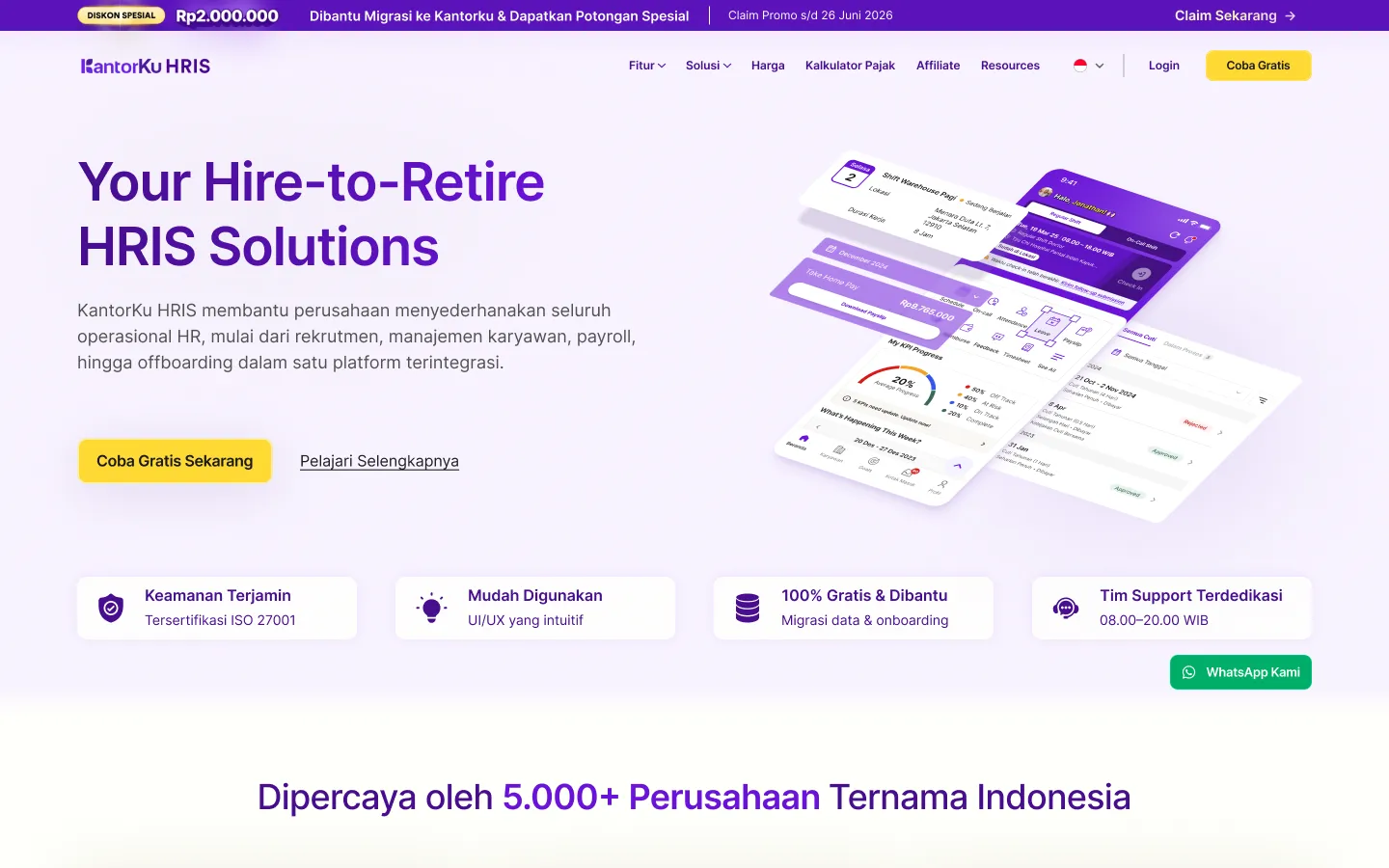
KantorKu is an HRIS that covers the full employee lifecycle in one product, from recruitment and onboarding to payroll, performance, and off-boarding. It serves companies from startups to multi-branch enterprises across more than ten industries.
(02) — Problem
The problem
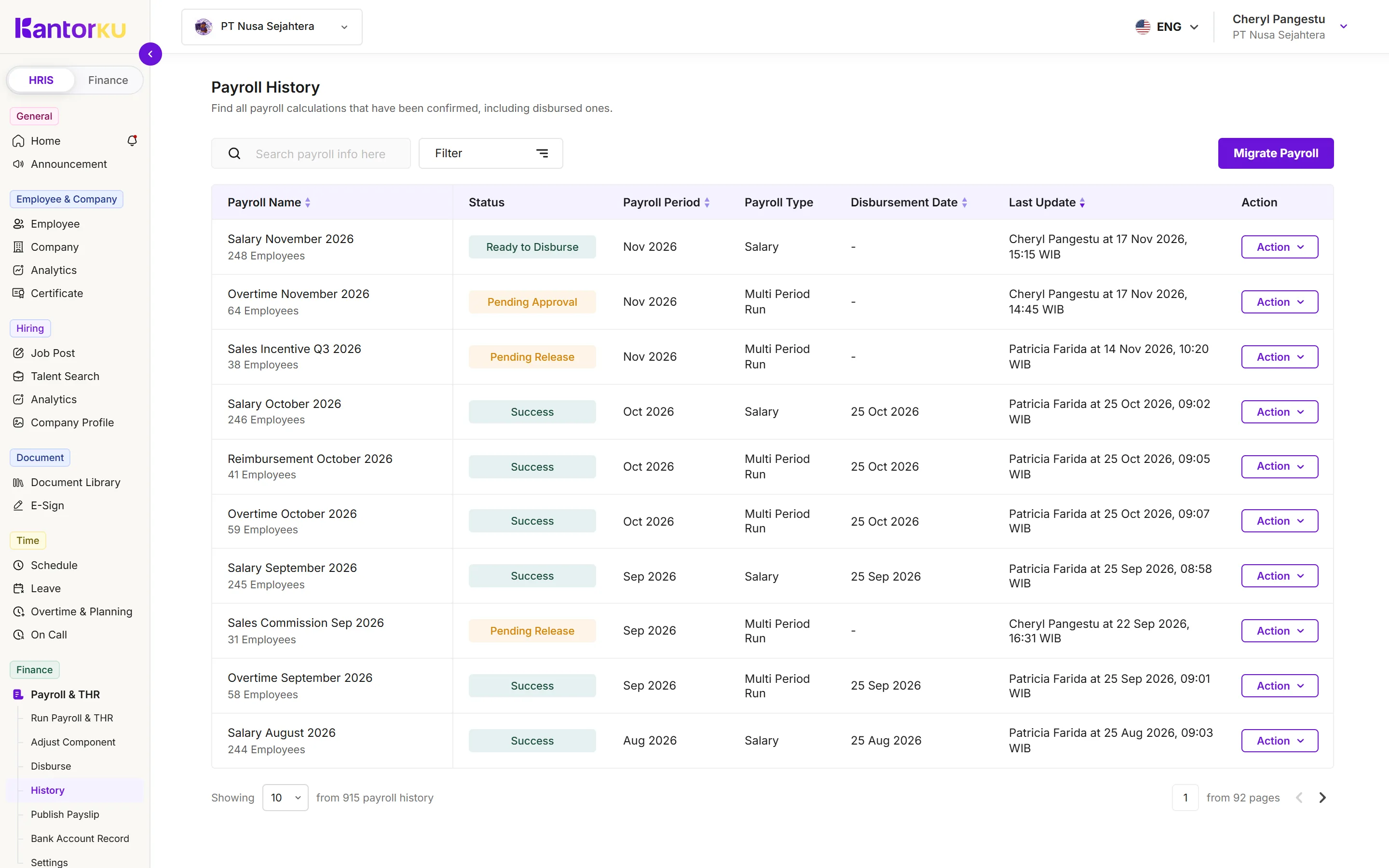
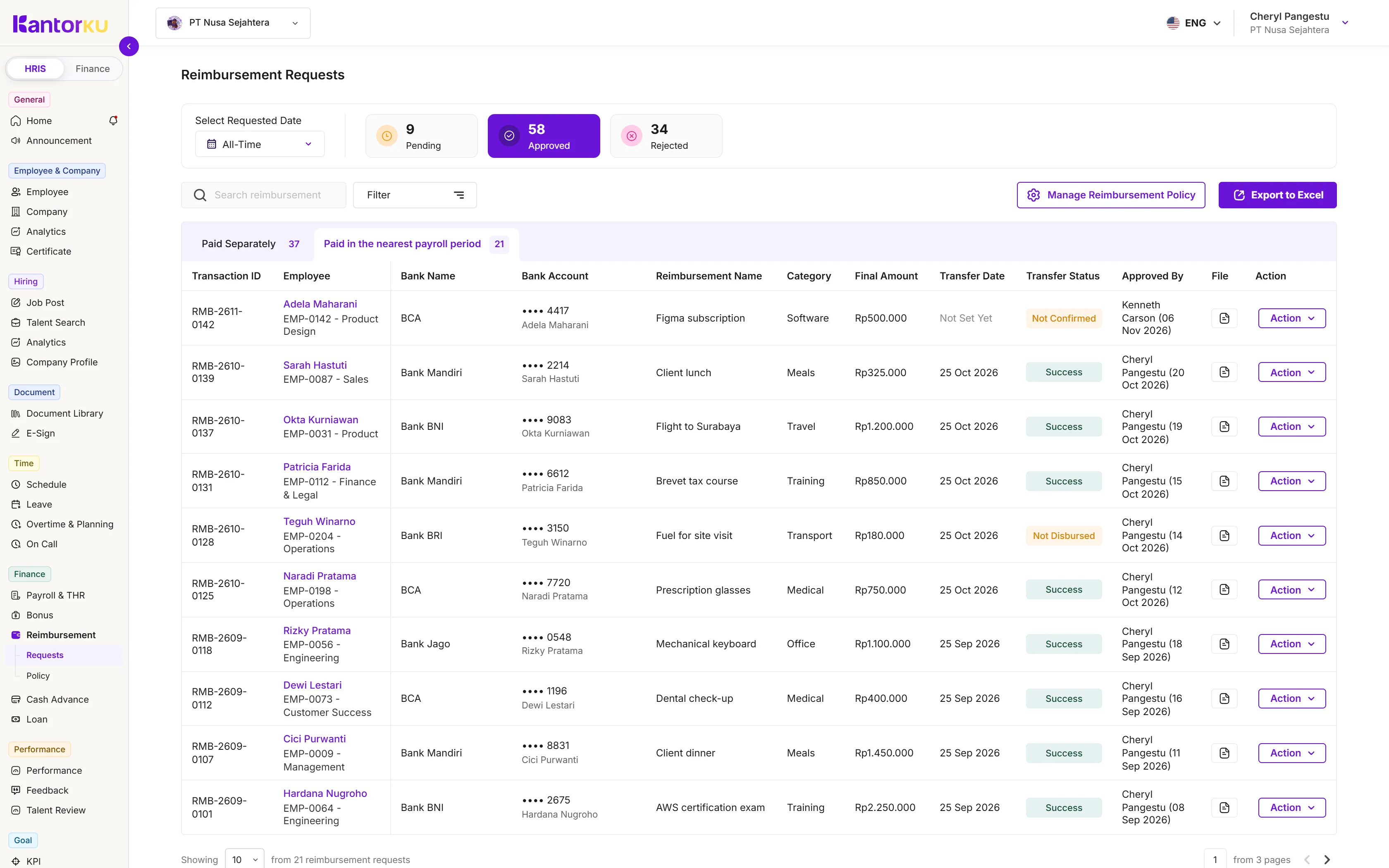
Many HR teams still manage pay, performance reviews, and training records across spreadsheets and separate tools. Calculations are done by hand, approvals stall, and employees can't see where their requests, goals, or certificates stand. These areas also depend on each other. A reimbursement or cash advance ends up in payroll. A completed assessment feeds a development plan. Every handoff is a place where trust can break, for HR admins who set the rules, managers who approve, and employees who check their status on mobile.
(03) — My role
My role
I design across the HRIS, with a focus on finance, performance, and learning & development. I also built the product's design system. I design for three kinds of users: HR admins who set up policies, managers who approve and review, and employees who use the mobile app every day. I work with a product manager, engineers, another designer, and QA, and I support other designers on the team with their features.
(04) — Scope
What I work on
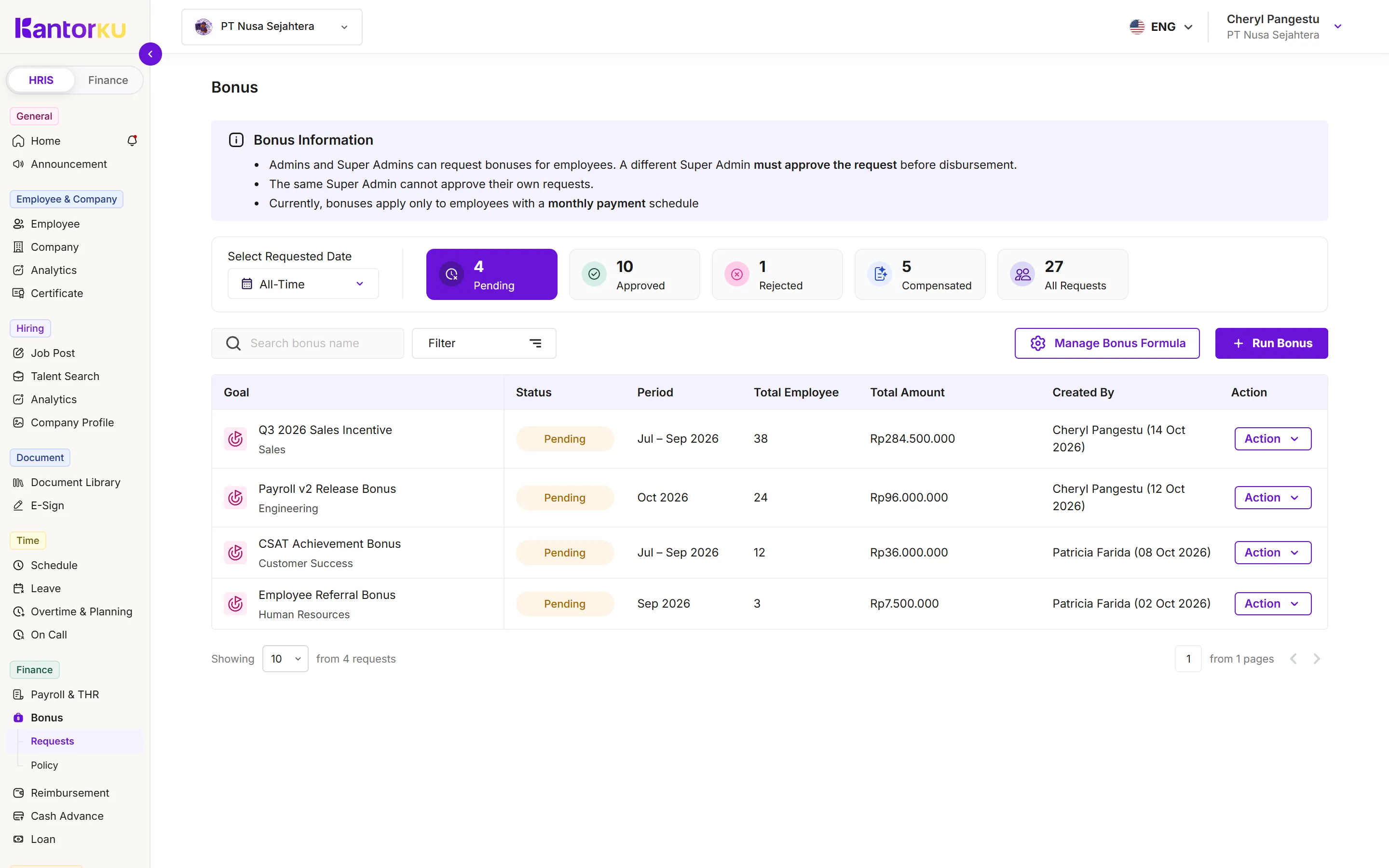
- Finance. Payroll with automatic salary, THR, and overtime calculation, plus PPh 21 and BPJS and digital payslips. Bonus management with policy setup, team and individual bonuses, and approval tracking. Cash advances and loans with approval flows, tenor and interest settings, and automatic salary deduction. Reimbursement with receipt upload, expense policy, and payment through payroll or direct transfer.
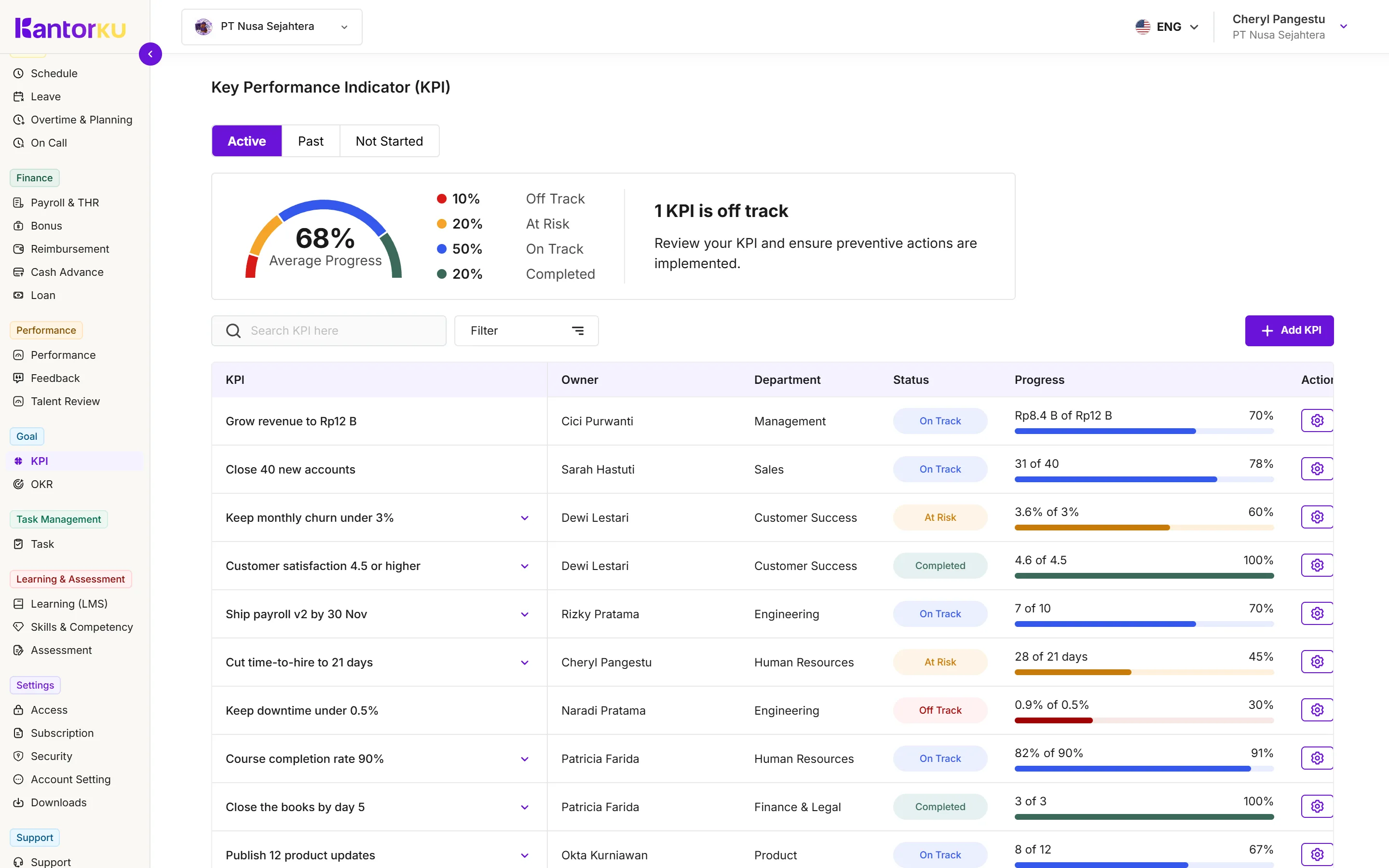
- Performance. 360-degree review with performance appraisal, feedback, and a 9-box matrix. OKR and KPI with cascading setup, progress updates, and in-app and email reminders.
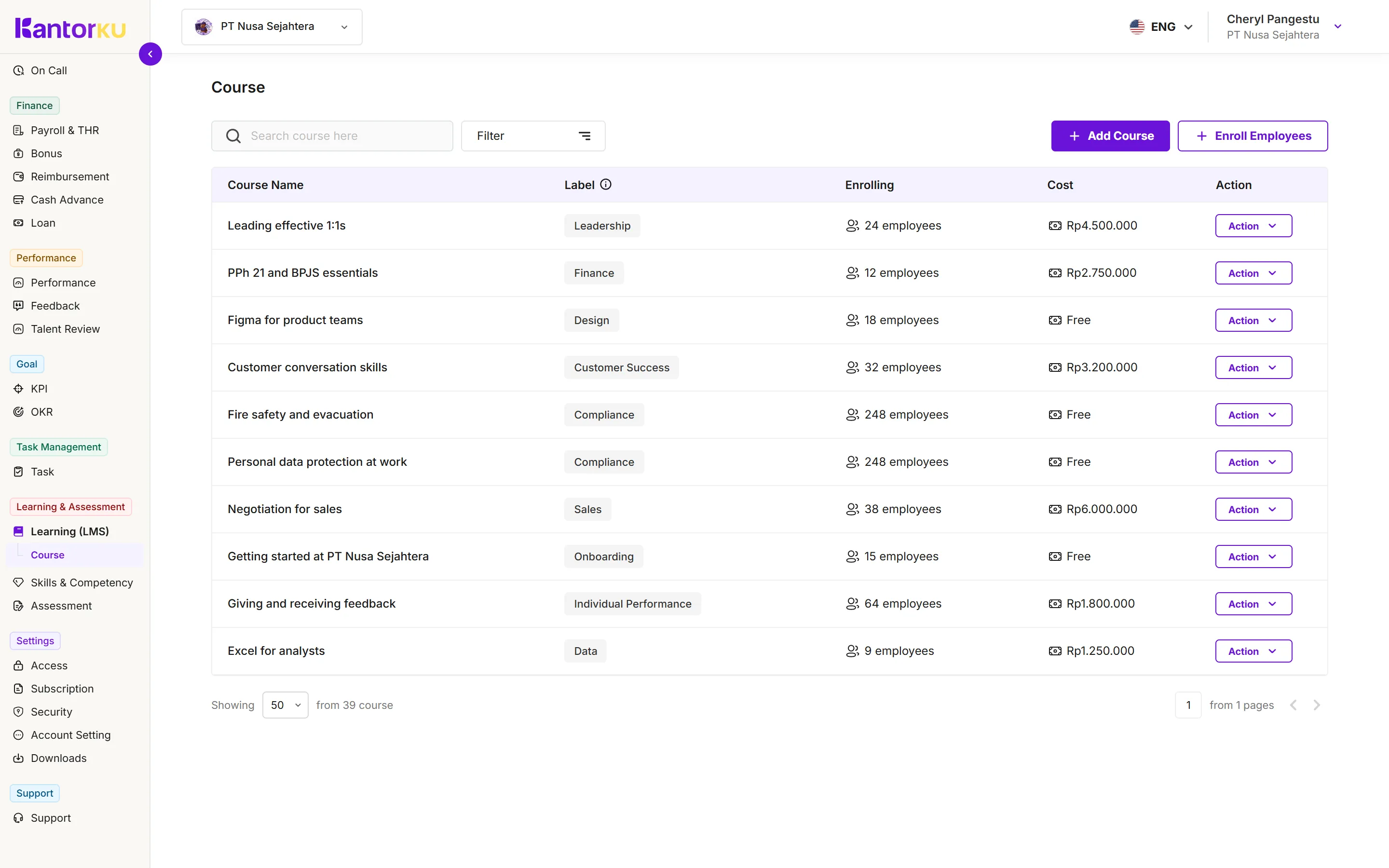
- Learning & Development. An LMS with a course library, training reminders, and mobile access. Competency mapping with skill assessments and development plans. Assessments with quizzes, evaluation forms, and score tracking. Digital certificates with storage, expiry reminders, and compliance tracking.
- Design system. I built the design system that the HRIS is designed with. It covers the foundations (color, typography, iconography, illustrations, spacing, and shadow) and more than 30 components and patterns, grouped into form controls, overlays and dialogs, navigation, feedback and status, data display, and filtering. It also includes patterns specific to HR workflows, such as approval history, status summaries, and filter bars, so modules built by different designers share the same building blocks.
- Beyond these areas. I also work on other features across the HRIS as needed, and I help other designers on the team by reviewing their work, sharing context from the modules I know well, and keeping patterns consistent across the product.
(05) — Outcome
Outcome
KantorKu is live on web, iOS, and Android, and supports companies across more than ten industries. The finance, performance, and learning modules I work on are part of the product's current offering.
(06) — Learnings
What I learned
Across finance, performance, and learning, the same pattern keeps appearing: an admin sets a policy, a manager approves, and an employee tracks the result. Keeping that pattern consistent matters more than making each module look different, because people carry what they learned in one flow into the next. Building the design system and working alongside other designers taught me that a shared pattern only holds when it is explained, not just documented. Turning the approval flow into a shared pattern, with its own history and status components, is what keeps a product with many modules feeling like one system.