Kemenkes Fellowship
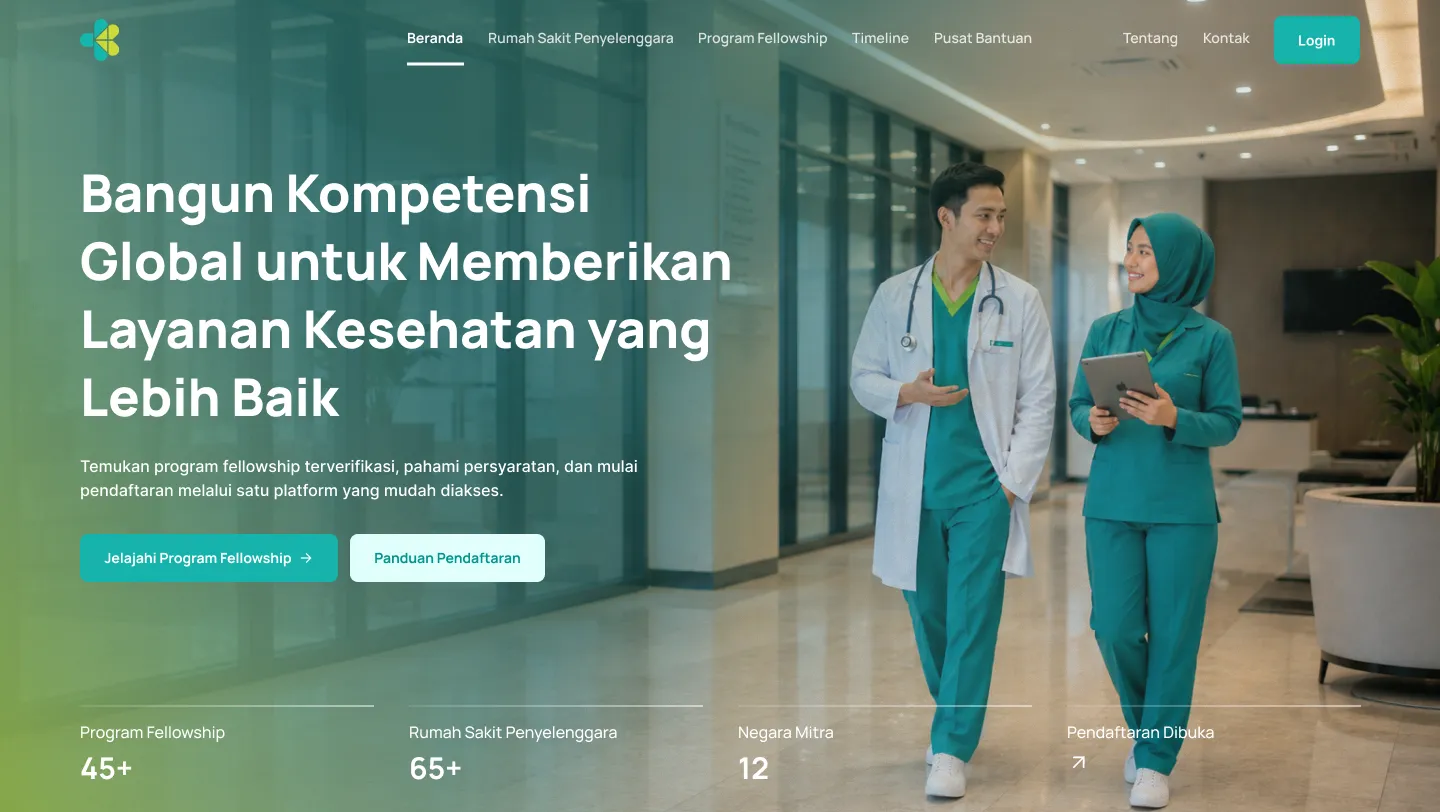
One portal where the Ministry of Health, collegiums, hospitals, and doctors run fellowship selection, from registration to the first day of training.
- UI/UX Designer
- Castellum Digital Indonesia / Ministry of Health
- 2026
- Figma
- Internal / not public

(01) — Context
Context & the challenge
The Ministry of Health funds fellowships that let specialist doctors train in a subspecialty at a teaching hospital, then return to serve in their home region. Each fellowship passes through four parties. The ministry opens the programme, the doctor applies, the collegium for that specialty judges competence, and the hospital decides whether it can take the doctor in. Before the portal, every hand-off ran on letters, email, and spreadsheets. Doctors sent documents more than once and rarely knew which stage they were in. The ministry had no single view of who had been checked, interviewed, or accepted. The portal needed to carry one application through all four parties and show each of them only the part that was theirs to decide.
(02) — My role
My role
I designed the Kemenkes Fellowship portal from scratch as a part- time UI/UX Designer at Castellum Digital Indonesia: the landing page, applicant registration, the admin selection dashboard, the participant portal, and participant monitoring. I also built its design system, ran usability tests, and handed off the designs to developers.
(03) — System
System logic & architecture
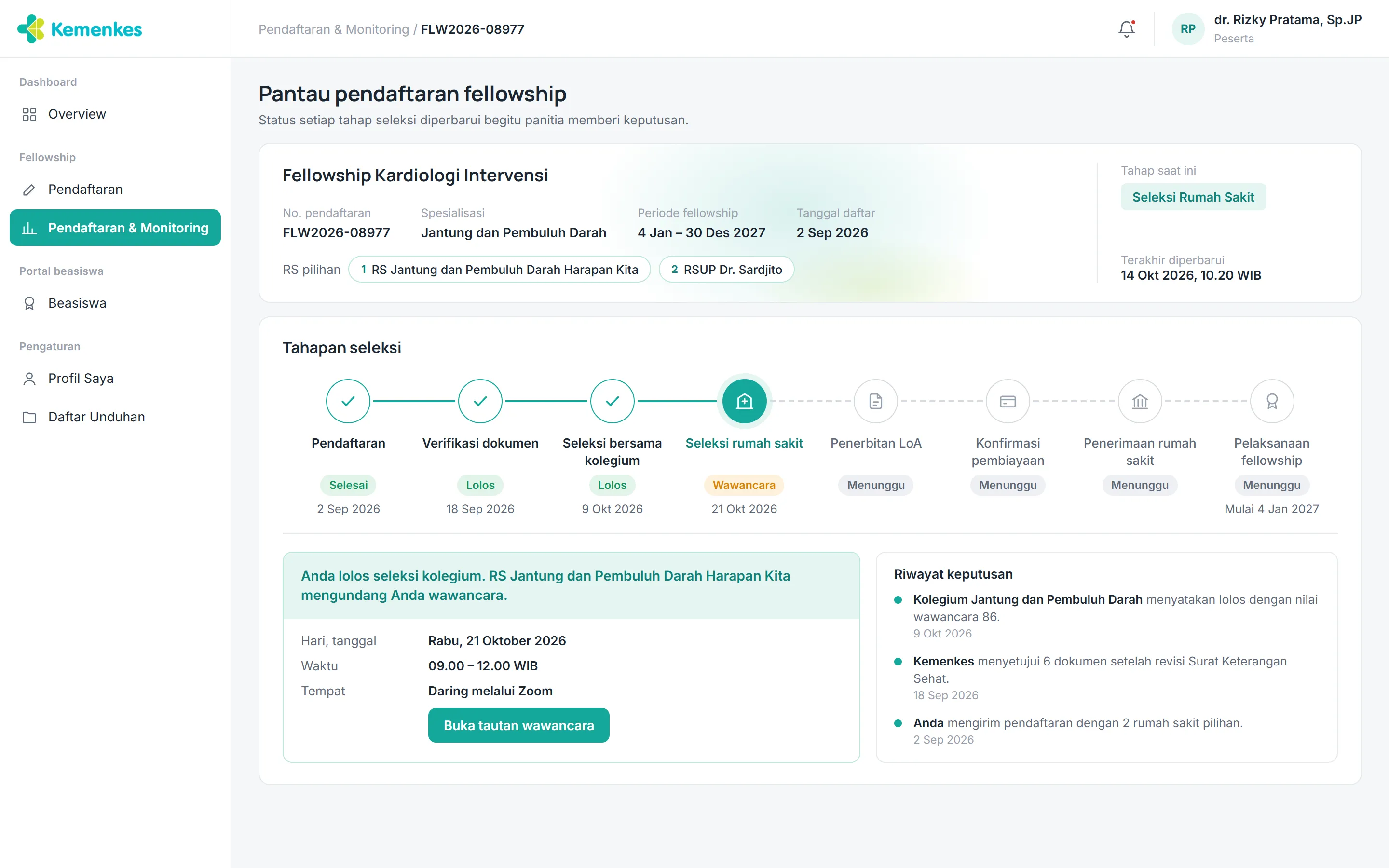
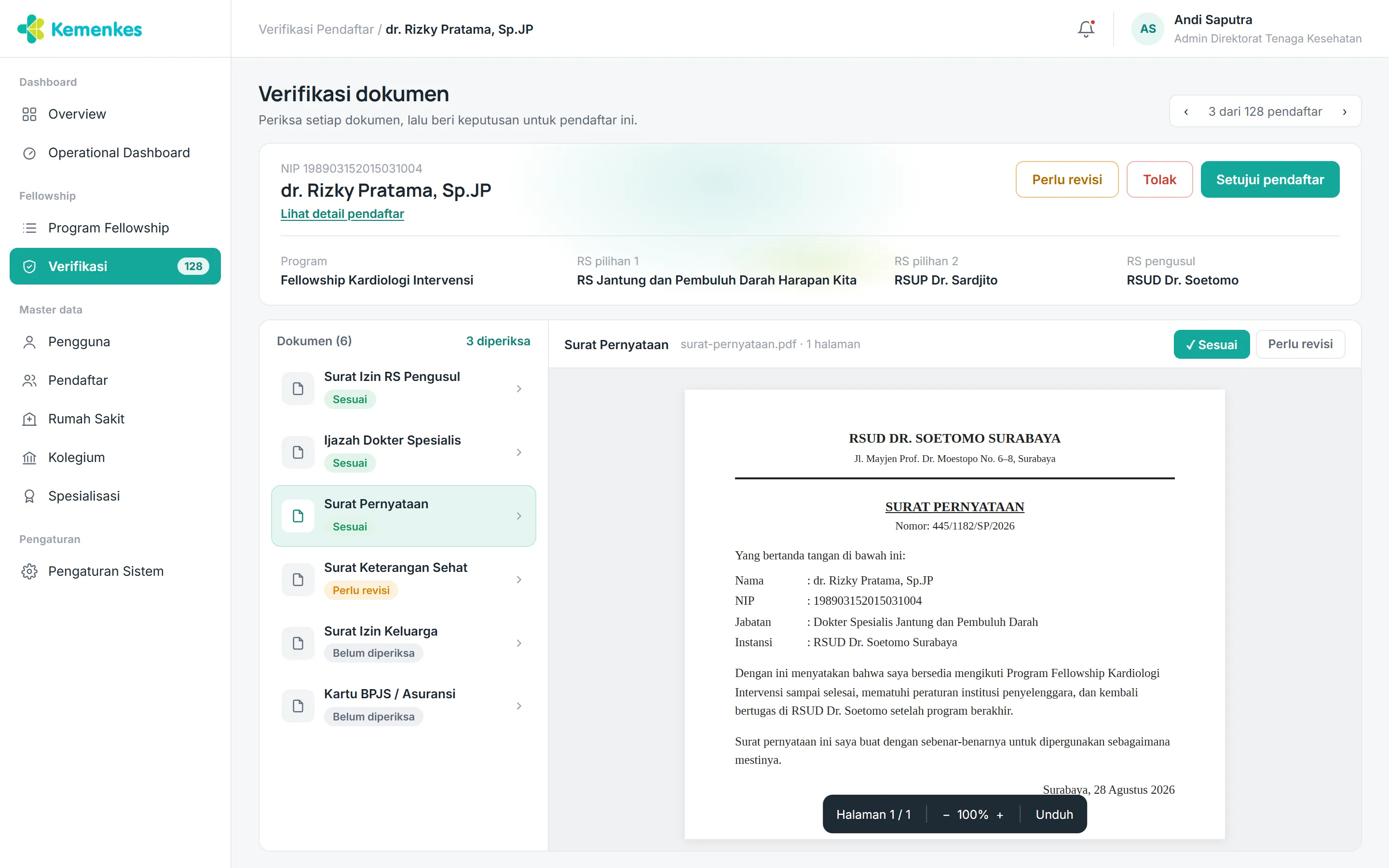
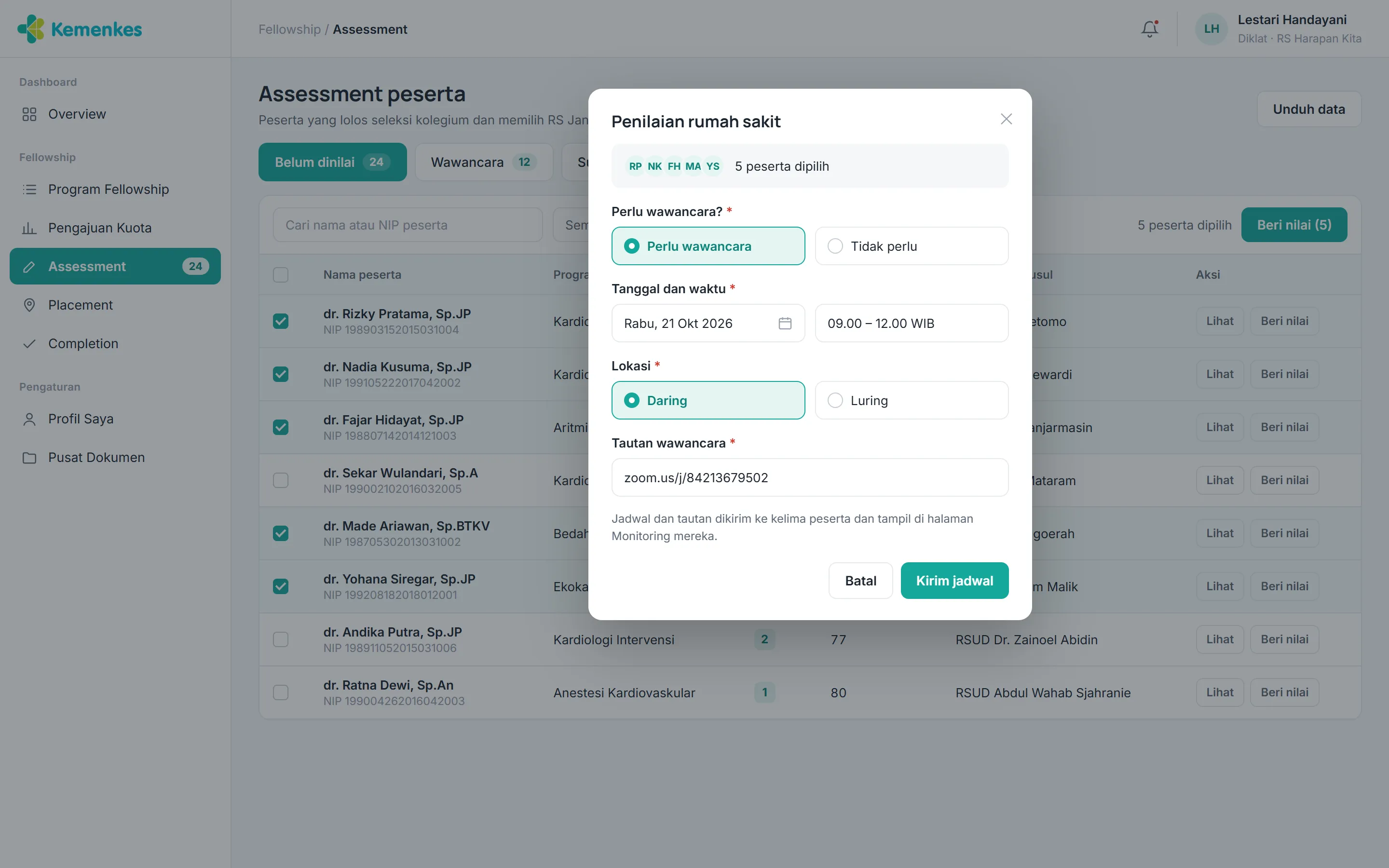
The ministry creates a programme with its specialty, quota, schedule, and essay questions, and hospitals request their share of the quota. Doctors register in three steps: the programme and two hospital choices, their employment and licence details with six documents, and the essays. The application then moves through gates, one per party. The ministry verifies each document and can approve, reject, or send it back for revision, with a window for the doctor to appeal or re-upload. The collegium assesses and interviews applicants who pass. The hospital runs its own interview, accepts the doctor, assigns a supervisor, and issues the letter of acceptance. The doctor confirms funding, and the hospital later marks the fellowship complete. Every decision is written back to the same record, so the doctor's tracker and each party's lists always agree.
(04) — Features
Key features
What each of the four parties sees, from the public site to completion.
- Public programme catalogueA landing site where doctors search fellowships by specialty, country, hospital, and duration before they sign in.
- Guided registrationThree steps for programme and hospital choices, employment and licence details with documents, and essays, saved as a draft along the way.
- Application trackerEight stages with status, dates, interview details, and the decisions so far, so doctors stop asking where their file is.
- Document verificationPer-document review for the ministry with approve, revise, and reject, plus an appeal window for the doctor.
- Collegium and hospital assessmentScoring and interview scheduling in batches, with the applicant's profile and essays in a side panel.
- Placement and completionHospitals accept doctors, assign supervisors, issue letters of acceptance, and upload completion certificates.
(05) — Impact
Impact & outcomes
- parties working on one application record
- 4
- selection stages visible to the doctor
- 8
- documents reviewed one by one
- 6
The portal replaced letters and spreadsheets with one record that each party moves forward in turn. Names and figures in these screens are sample data.